What is a Design Sprint? The Complete Guide
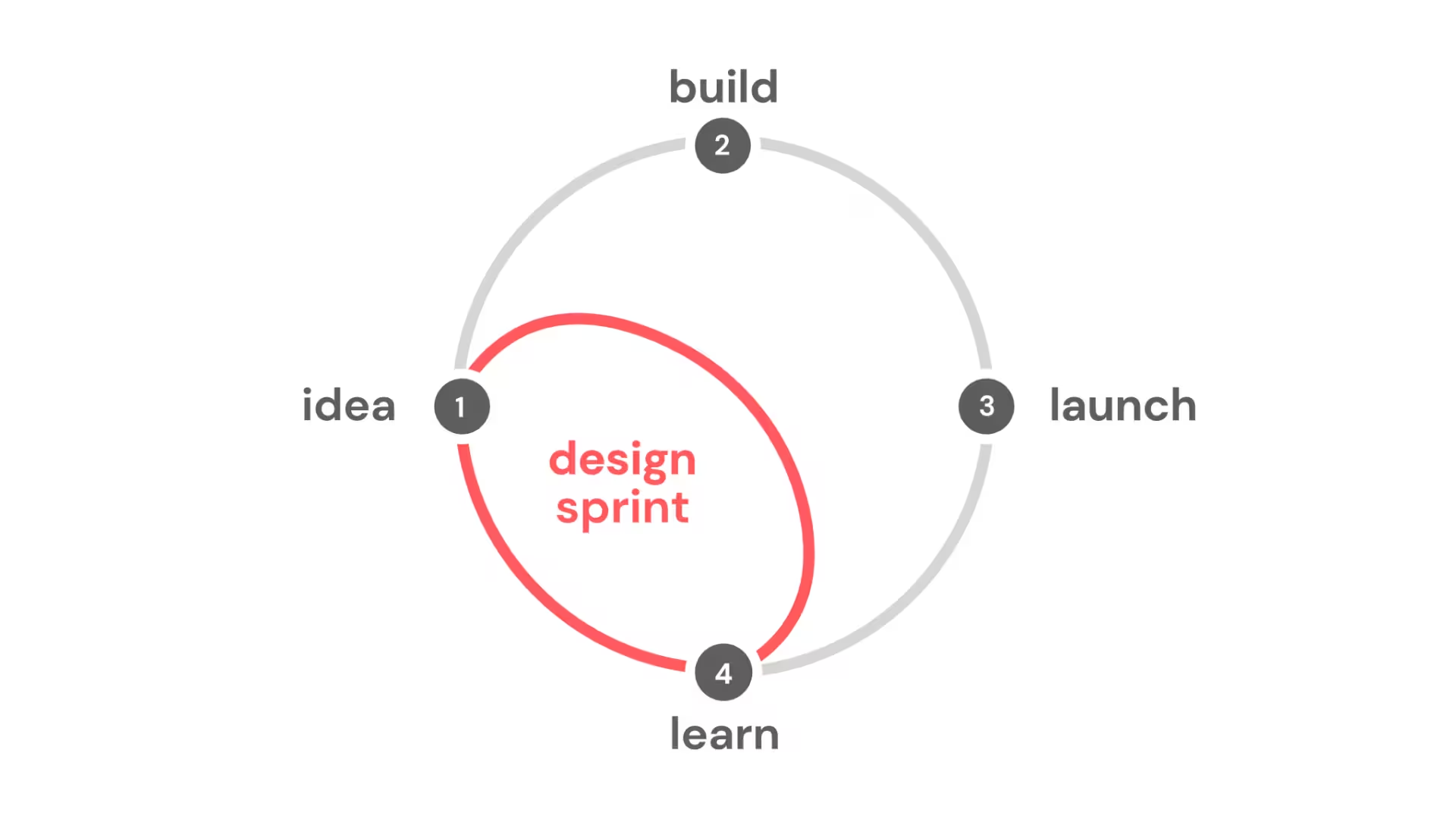
A Design Sprint is a structured four-day process that allows teams to prototype and test ideas with real users, before committing time and money to development.
If you and your product team have spent a year building something nobody wanted, or delayed a launch because no one could agree on a direction, you already understand the problem a Design Sprint solves.
Right now, that same problem is showing up in a new way. The teams we work with aren’t just deciding what product to build; they’re deciding how to bring AI into their products in a way that customers will actually use.
At BeTheLeap, we help start-ups and global enterprise leadership teams align on what to build, how to validate it, and how to move fast. The Design Sprint is one of the most powerful tools we can utilise to apply this process.
This is our complete guide to what a Design Sprint is, how it works, and what is different about the way we do things here.
The Original 5-Day Design Sprint
Jake Knapp first created the Design Sprint during his time at Google Ventures.
Tasked with helping portfolio startups move faster, Knapp developed a repeatable process that brought together a small team, focused them on a single critical challenge, and ended the week with a real answer.
The methodology was published in Knapp’s 2016 book Sprint, and it was quickly adopted by start-ups and big-scale companies alike, including Slack, Airbnb, LEGO, and AJ&Smart.

BeTheLeap’s 4-Day Sprint
Based in Berlin, AJ&Smart was the first agency outside of GV to adopt and advance Jake’s version of the Design Sprint methodology. During my time there as a Product Design Director, I was responsible for the AJ&Smart Sprint process, the client experience and the product outcomes.
Throughout those years, my team and I developed the latest version of the Design Sprint that AJ&Smart is known for today. We designed the revised four-day Sprint methodology to get C-Suite leadership teams back to work faster with as little disruption as possible, a huge shift from the original Design Sprint, which required them to be available for the whole week.
Today, my team and I at BeTheLeap continue to run these highly tuned Design Sprints for Fortune 500 companies and start-ups all over the world.
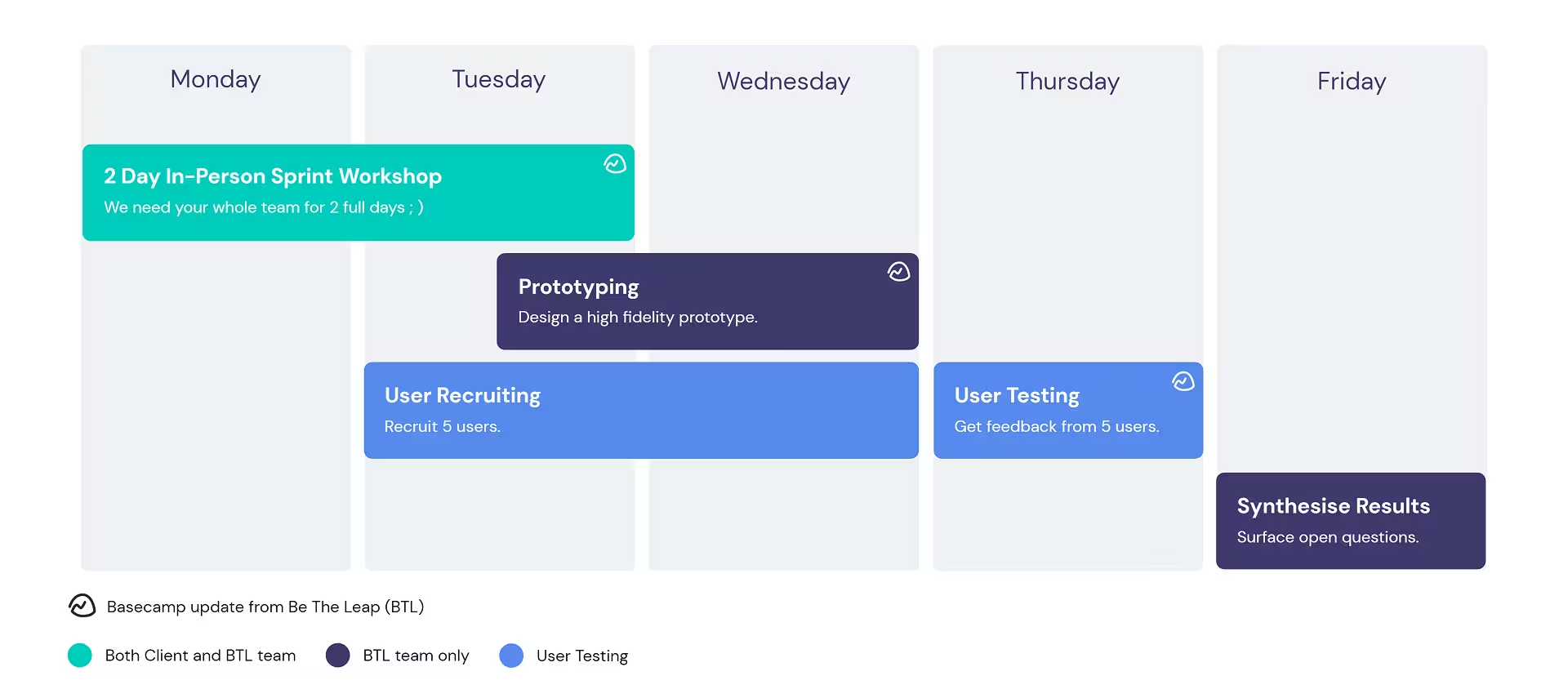
The Sprints Comparison

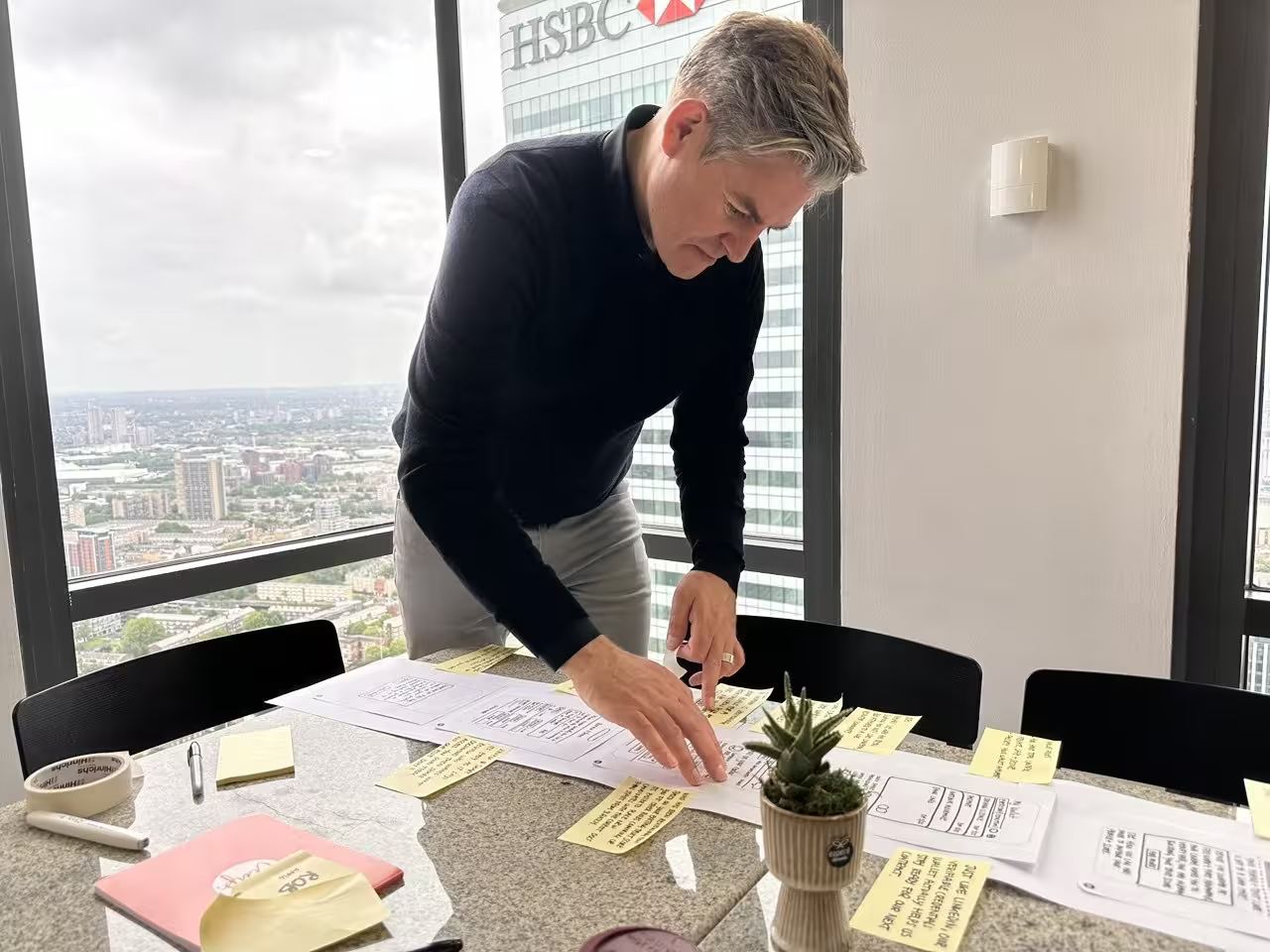
A Design Sprint follows a precise structure. In my experience, each exercise has a specific purpose, and skipping any part breaks the process.
Map: The team maps the problem space, talks to internal experts, and commits to a single challenge to focus on.
Sketch: Participants individually sketch solution ideas.
Decide: Participants review all the concept sketches and vote on the strongest ones. The concept sketch with the most votes is made into a storyboard, which becomes the prototype blueprint.
Prototype: Our team at BeTheLeap takes over and builds a realistic prototype for you in a single day.
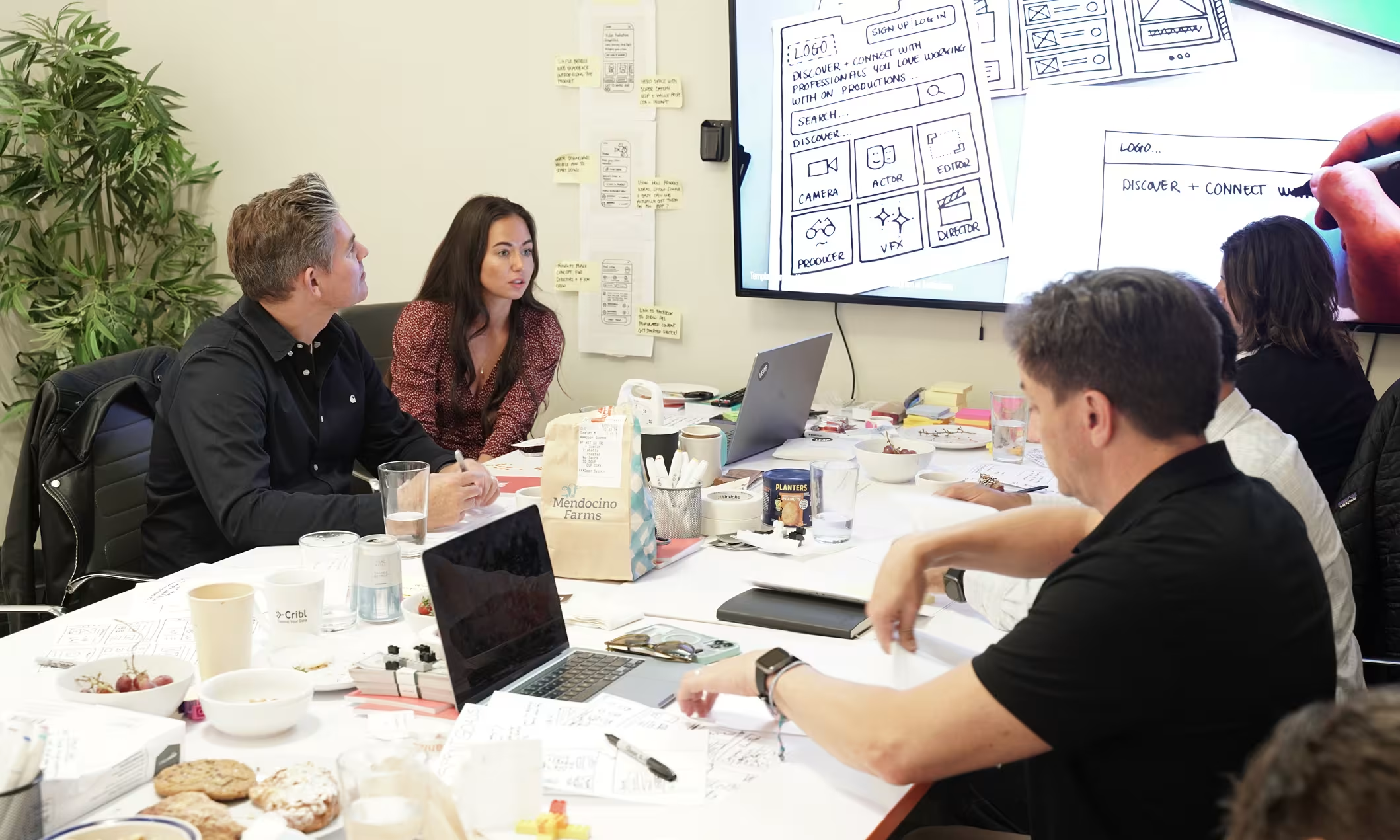
Test: We test the prototype with five users. The team observes from a separate room to capture what works and what doesn’t.
Who is in the room?
A Design Sprint requires a small, cross-functional team of 3-6 participants, and a designated Decider.
The Decider is typically the CEO, CPO, or most senior person responsible for the product. While every voice in the room matters, the Decider is the one who makes the final call should there be a deadlock, which keeps the momentum going and decisions moving. Remember: There cannot be a Sprint without a Decider!
The rest of the client team includes a person who is responsible for each of the following: product, engineering, growth, marketing and design or UX. Our Sprints at BeTheLeap will also include experts or SME (Subject Matter Experts), as part of our onboarding and understanding of the Sprint Challenge.
When helping teams choose their participants, I use a simple rule of thumb: if someone is responsible for the product's success after the Sprint, they need to be included right from the beginning. Spaces are limited to eight, so choose wisely!
You want the people who understand the customer problem most deeply, who have the technical knowledge to know what’s actually buildable, and who will champion the vision once the Sprint ends.
Meanwhile, our facilitator handles the entire process and keeps the momentum going, freeing your team up to focus purely on the problem.
When a Design Sprint makes sense - and when it doesn't
People often ask if a Design Sprint is a magic bullet for every project. The short answer is no. Over the years, I've found that a Design Sprint investment works best when:
- You have a significant product decision to validate, and no clear direction to move forward.
- You’re about to invest substantial amounts of budget and resources into either a new product or a new product feature that your business relies on.
- Your team is stuck in alignment loops or competing priorities.
- You want to test a new product concept, feature, or market direction before committing to development.
On the flip side, I advise against a Sprint if:
- You don’t yet have a well-defined challenge.
- It’s just a UX or design problem you’re trying to solve.
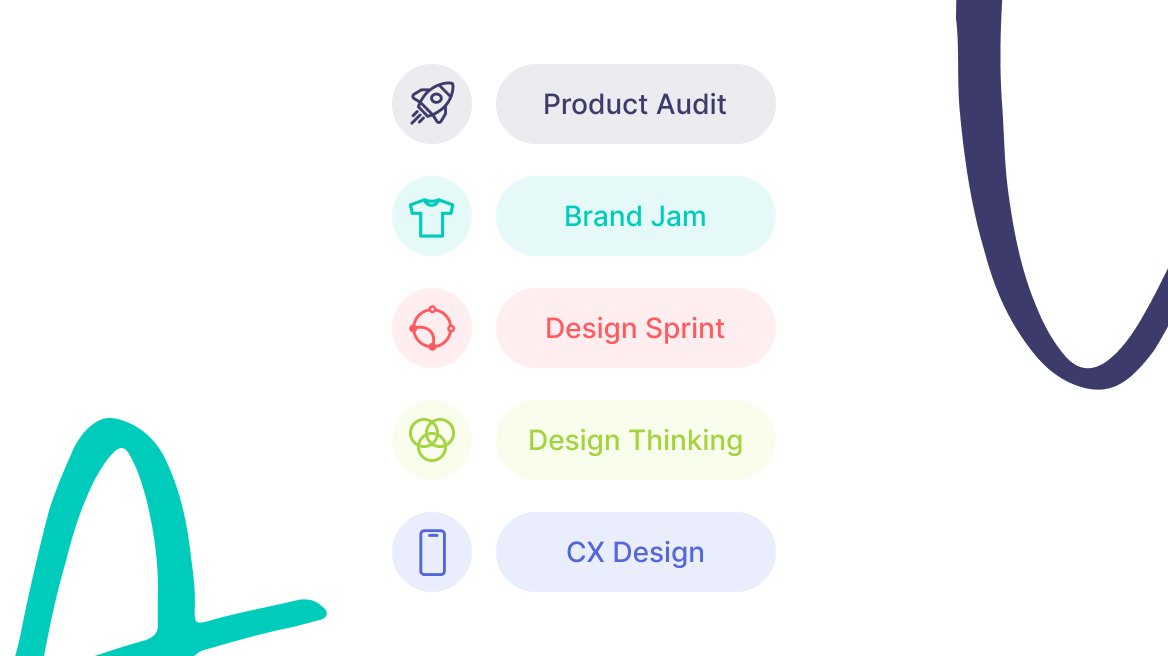
- You’re just overhauling an existing product. If you need to fix something that is already live, we highly recommend our Product Audit instead.
- The Decider cannot commit to the workshop days.
What you get at the end of your Sprint
At the end of a BeTheLeap Design Sprint, you don't just get a list of ideas, you get a high-fidelity prototype that has been tested on by five real users.
I always remind clients: the prototype we build in one day is NOT the finished, coded product. The important thing is that it looks and feels real enough to elicit genuine reactions from test users. This is what will help us identify where the prototype succeeds and where it fails.
At BeTheLeap, our process goes a step further. Typically after the first week, my team runs an Iteration Sprint. This is another four-day cycle (including a brief one-day workshop) where we take everything we learned, fix what didn’t work, and flesh out the winning ideas gathered from week one.
Why Iteration Sprints are beneficial
We have found that running an Iteration Sprint helps to make our clients products more successful. At the end of week one, you're given a ton of data and a prototype that hints at a product experience, but it relies on our interpretation and guidance to know what this information actually means.
We found that taking ownership, running another one-day workshop to re-align and then spending two more days to embellish the prototype helped guide our clients to be more prepared for internal buy-in, understanding market readiness or PMF (product Market Fit) to execute into a more successful product for their business.
See our use cases
Booking.com
We can’t say too much about our work with Booking.com just yet. When their new strategy goes public, we’ll be the first to talk more openly about why they turned to us, a boutique agency in Berlin, to help one of the world’s largest travel brands validate their strategy.
Contact us for more information
Ericsson Emodo
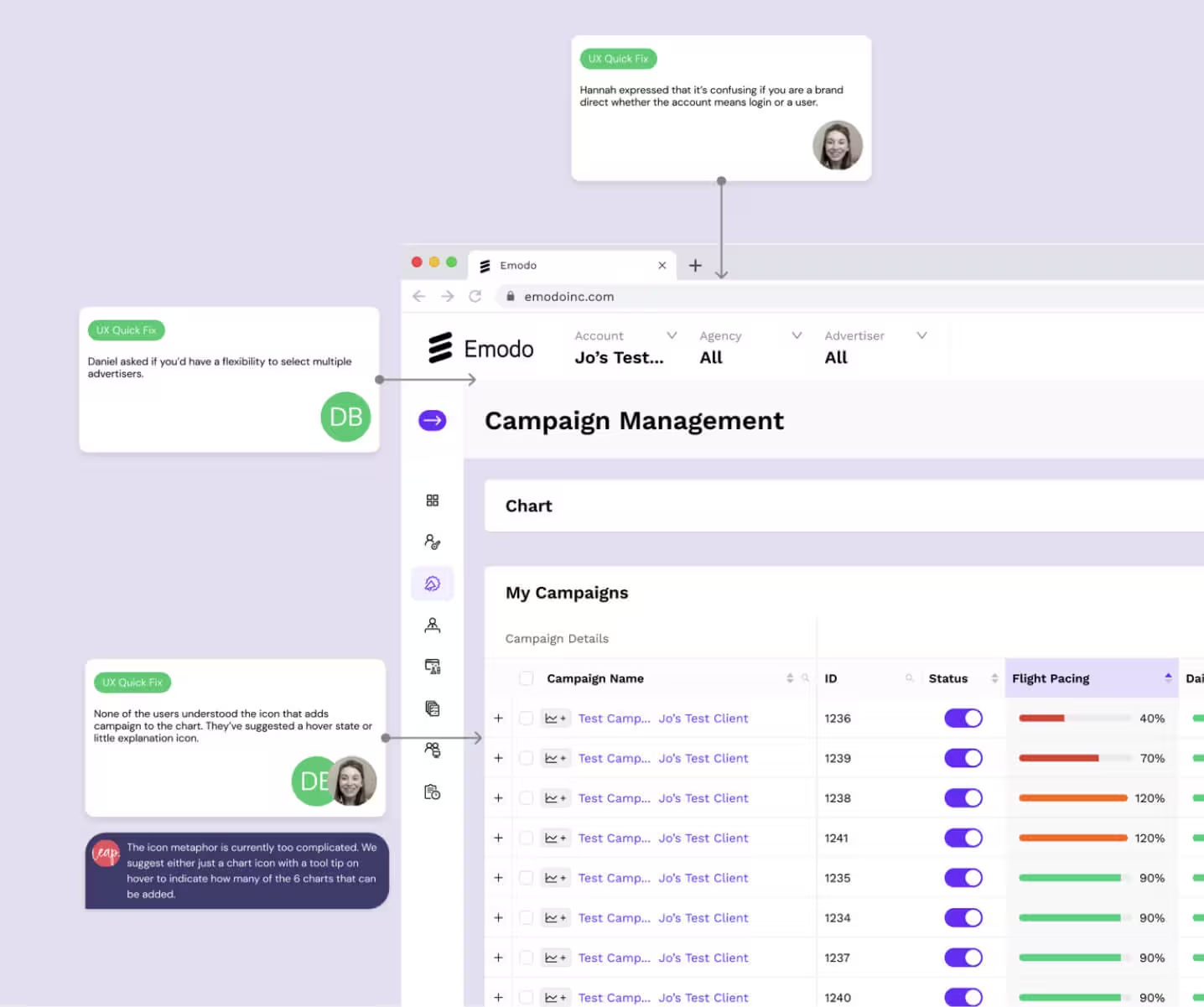
The Emodo product team brought us in to validate the viability of transitioning their DSP platform to a self-service model. We helped them test user adoption and prove that automation-driven simplification could seamlessly coexist with their existing campaign setup, management, and optimization tools.
Get in touch with us for the full case study
Mylo - The Pet App
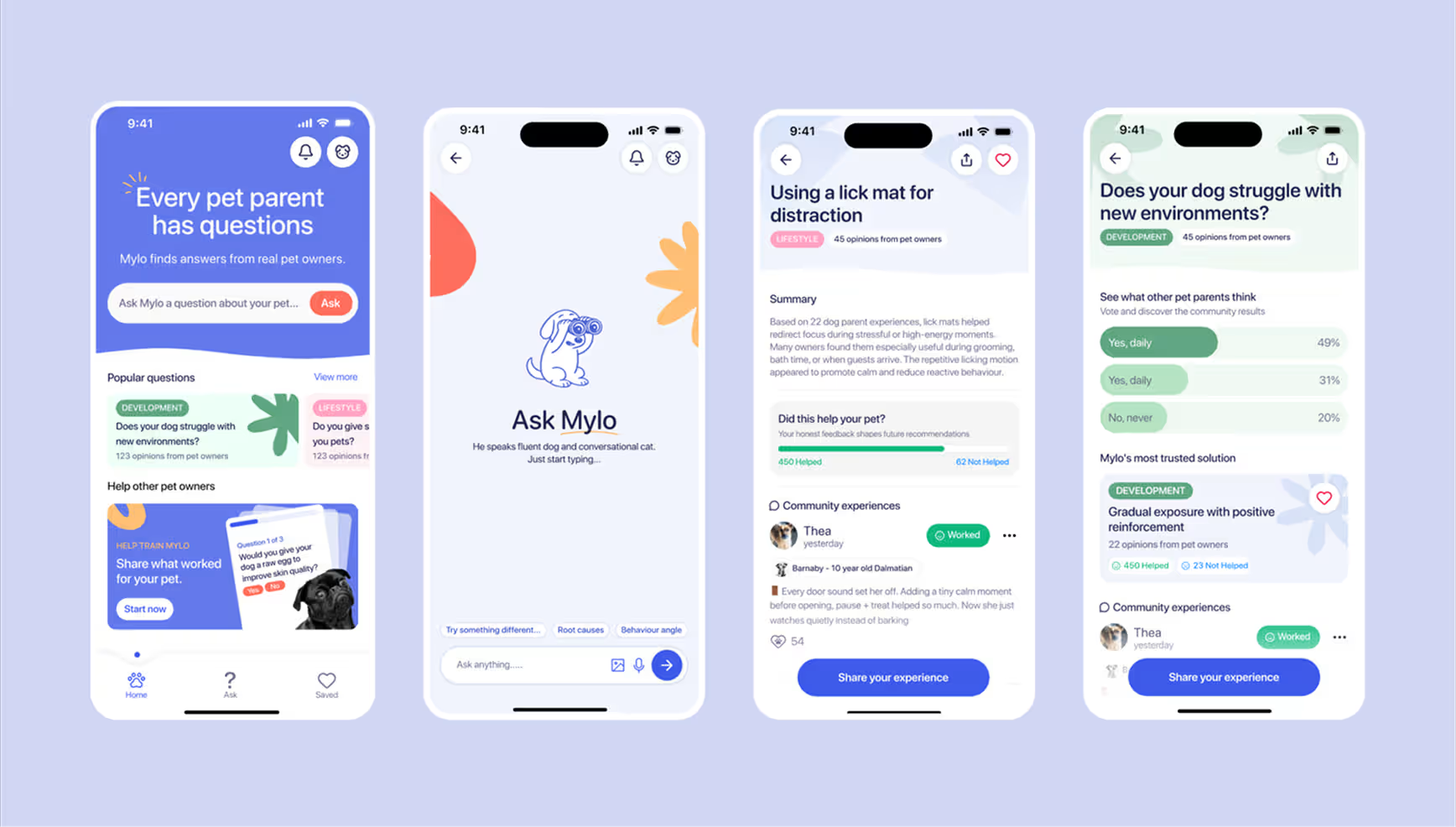
Mylo, a US-based start-up, came to BeTheLeap to iterate on and test their idea for an AI-powered app for pet parents. Using a remote Design Sprint, we helped to establish a clear product direction, distinct brand personality, and actionable insights for investor pitches.
Get in touch with us for the full case study
Ready to run a Design Sprint?
At BeTheLeap, we run Design Sprints in-person and remotely, for early-stage startups and global enterprises. If you’re facing a significant product decision, the fastest path to clarity is a four-day sprint, instead of months of endless discussion.
Learn about BeTheLeap's Design Sprint
FAQs about Design Sprints:
1. Can you run a Design Sprint remotely?
Design Sprints can be conducted both in-person and remotely. Remote sprints often use collaboration tools and video conferencing to facilitate the process. One of our favourite collaboration tools and friends of BeTheLeap is Butter. Check out our case study here. (Butter was acquired by Miro in March 2025, and later discontinued in February 2026, with the team's technology integrated into new Miro features.)
Actually, some of the remote exercises are better digitally, we just prefer the in-person Sprints. We also understand that startups don't necessarily have the budget to fly the BeTheLeap team all around the world, so remote Sprints can work just fine.
2. How much time should we allocate for preparation before a Design Sprint?
To prepare for your Design Sprint, we usually take a week to onboard your Sprint team participants, discuss your challenge, and recruit candidates for user-testing. Depending on your personal requirements (i.e., B2B or B2C, startup or enterprise), this onboarding process can take longer.
Your Sprint team needs to be available for an individual one-hour call each during onboarding. Typically, the Decider will kick-start the individual team calls. Deciders should keep two hours free- one hour at the beginning and ending of onboarding.
3. Are Design Sprints only for product development, or can they be used for other purposes (i.e., AI challenges)?
While Design Sprints are commonly associated with digital product development, they can be adapted for various business purposes, including process improvement, marketing campaigns, and even organisational strategy.
Most of BeTheLeap Design Sprints in the past few years have been focused either on an AI corporate transformation challenge or an AI product challenge.
Think of the output as something you want to test. It could be a promotional video, a health bar, or even a physical reception area made more child-friendly! So the possibilities are endless.
Still having more questions? Check our FAQs section or get in touch with us!